
 American Journal of Human Genetics
 Animal Genetics
 Current Genetics
 Genetics Research
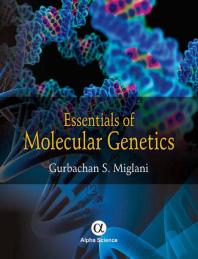 Essentials of Molecular Genetics
by
ESSENTIALS OF MOLECULAR GENETICS is primarily designed as a text book for undergraduate students studying molecular genetics. It provides concise yet complete knowledge on the nature, structure, molecular forms, location, organization, packaging, recombination, damage, transposition, repair, protection of genetic material; gene structure, gene organization, gene function, transcription, RNA processing, genetic code, translation, and fate of finished proteins, ribosomes, and used messenger RNAs; and molecular mechanisms of regulation of gene expression in viruses, bacteria and eukaryotes, role of epigenetic modifications in gene regulation, role of DNA and histone modification, and noncoding RNAs and gene silencing in bacteria, viruses and eukaryotes.The book also deals with various molecular tools, techniques and technologies - DNA/RNA separation, in situ hybridization, squash dot hybridization, southern blotting, northern blotting, western blotting, eastern blotting, dot blot, slot blot, electrophoresis, colony hybridization, plaque hybridization, chromosome walking, chromosome jumping/hopping, chromosome landing, nick translation, RNA sequencing, DNA sequencing, RNA synthesis, DNA synthesis, DNA synthesis machines, DNA fingerprinting, DNA markers, microarrays, restriction endonucleases, recombinant DNA technology, and quantitative trait loci mapping, methods for detection of mutations, site-directed mutagenesis, Smith's gene knockout technique, transposon mutagenesis, antisense molecules, hybrid arrested translation, hybrid released translation, transcriptomic analyses, proteomic analyses, etc. - frequently used in molecular genetic studies.
Essentials of Molecular Genetics
by
ESSENTIALS OF MOLECULAR GENETICS is primarily designed as a text book for undergraduate students studying molecular genetics. It provides concise yet complete knowledge on the nature, structure, molecular forms, location, organization, packaging, recombination, damage, transposition, repair, protection of genetic material; gene structure, gene organization, gene function, transcription, RNA processing, genetic code, translation, and fate of finished proteins, ribosomes, and used messenger RNAs; and molecular mechanisms of regulation of gene expression in viruses, bacteria and eukaryotes, role of epigenetic modifications in gene regulation, role of DNA and histone modification, and noncoding RNAs and gene silencing in bacteria, viruses and eukaryotes.The book also deals with various molecular tools, techniques and technologies - DNA/RNA separation, in situ hybridization, squash dot hybridization, southern blotting, northern blotting, western blotting, eastern blotting, dot blot, slot blot, electrophoresis, colony hybridization, plaque hybridization, chromosome walking, chromosome jumping/hopping, chromosome landing, nick translation, RNA sequencing, DNA sequencing, RNA synthesis, DNA synthesis, DNA synthesis machines, DNA fingerprinting, DNA markers, microarrays, restriction endonucleases, recombinant DNA technology, and quantitative trait loci mapping, methods for detection of mutations, site-directed mutagenesis, Smith's gene knockout technique, transposon mutagenesis, antisense molecules, hybrid arrested translation, hybrid released translation, transcriptomic analyses, proteomic analyses, etc. - frequently used in molecular genetic studies.
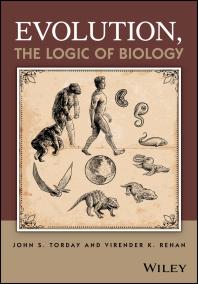 Evolution, the Logic of Biology
by
By focusing on the cellular mechanisms that underlie ontogeny, phylogeny and regeneration of complex physiologic traits, Evolution, the Logic of Biology demonstrates the use of homeostasis, the fundamental principle of physiology and medicine, as the unifying mechanism for evolution as all of biology. The homeostasis principle can be used to understand how environmental stressors have affected physiologic mechanisms to generate condition-specific novelty through cellular mechanisms. Evolution, the Logic of Biology allows the reader to understand the vertebrate life-cycle as an intergenerational continuum in support of effective, on-going environmental adaptation. By understanding the principles of physiology from their fundamental unicellular origins, culminating in modern-day metazoans, the reader as student, researcher or practitioner will be encouraged to think in terms of the prevention of disease, rather than in the treatment of disease as the eradication of symptoms. By tracing the ontogeny and phylogeny of this and other phenotypic homologies, one can perceive and understand how complex physiologic traits have mechanistically evolved from their simpler ancestral and developmental origins as cellular structures and functions, providing a logic of biology for the first time. Evolution, the Logic of Biology will be an invaluable resource for graduate students and researchers studying evolutionary development, medicine and biology, anthropology, comparative and developmental biology, genetics and genomics, and physiology.
Evolution, the Logic of Biology
by
By focusing on the cellular mechanisms that underlie ontogeny, phylogeny and regeneration of complex physiologic traits, Evolution, the Logic of Biology demonstrates the use of homeostasis, the fundamental principle of physiology and medicine, as the unifying mechanism for evolution as all of biology. The homeostasis principle can be used to understand how environmental stressors have affected physiologic mechanisms to generate condition-specific novelty through cellular mechanisms. Evolution, the Logic of Biology allows the reader to understand the vertebrate life-cycle as an intergenerational continuum in support of effective, on-going environmental adaptation. By understanding the principles of physiology from their fundamental unicellular origins, culminating in modern-day metazoans, the reader as student, researcher or practitioner will be encouraged to think in terms of the prevention of disease, rather than in the treatment of disease as the eradication of symptoms. By tracing the ontogeny and phylogeny of this and other phenotypic homologies, one can perceive and understand how complex physiologic traits have mechanistically evolved from their simpler ancestral and developmental origins as cellular structures and functions, providing a logic of biology for the first time. Evolution, the Logic of Biology will be an invaluable resource for graduate students and researchers studying evolutionary development, medicine and biology, anthropology, comparative and developmental biology, genetics and genomics, and physiology.
This site is maintained by the librarians of George A. Spiva Library.
If you have a question or comment about the Library's LibGuides, please contact the site administrator.
