
 American Naturalist
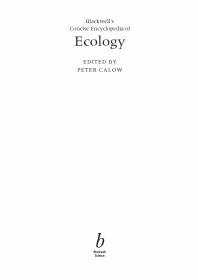 Blackwell's Concise Encyclopedia of Ecology
by
The language of ecology has grown rapidly and changed extensively over the last decade. From Arrhenotoky to Psammosere; from the One-tailed test to Zoocoenosis, the Blackwell Concise Encyclopedia of Ecology provides concise, non-technical definitions of over 2000 ecological terms, covering the complete spectrum of pure and applied ecological research. The definitions are drawn from the Encyclopedia of Ecology and Environmental Management, and are fully cross-referenced. This is the most comprehensive and up-to-date dictionary of ecological terms available. It should be invaluable to students and researchers alike. Over 2000 terms defined Avoids technical jargon Fully cross-referenced Includes common abbreviations
Blackwell's Concise Encyclopedia of Ecology
by
The language of ecology has grown rapidly and changed extensively over the last decade. From Arrhenotoky to Psammosere; from the One-tailed test to Zoocoenosis, the Blackwell Concise Encyclopedia of Ecology provides concise, non-technical definitions of over 2000 ecological terms, covering the complete spectrum of pure and applied ecological research. The definitions are drawn from the Encyclopedia of Ecology and Environmental Management, and are fully cross-referenced. This is the most comprehensive and up-to-date dictionary of ecological terms available. It should be invaluable to students and researchers alike. Over 2000 terms defined Avoids technical jargon Fully cross-referenced Includes common abbreviations
 Ecology of North America
by
North America contains an incredibly diverse array of natural environments, each supporting unique systems of plant and animal life. These systems, the largest of which are biomes, form intricate webs of life that have taken millennia to evolve. This richly illustrated book introduces readers to this extraordinary array of natural communities and their subtle biological and geological interactions. Completely revised and updated throughout, the second edition of this successful text takes a qualitative, intuitive approach to the subject, beginning with an overview of essential ecological terms and concepts, such as competitive exclusion, taxa, niches, and succession. It then goes on to describe the major biomes and communities that characterize the rich biota of the continent, starting with the Tundra and continuing with Boreal Forest, Deciduous Forest, Grasslands, Deserts, Montane Forests, and Temperature Rain Forest, among others. Coastal environments, including the Laguna Madre, seagrasses, Chesapeake Bay, and barrier islands appear in a new chapter. Additionally, the book covers many unique features such as pitcher plant bogs, muskeg, the polar ice cap, the cloud forests of Mexico, and the LaBrea tar pits. "Infoboxes" have been added; these include biographies of historical figures who provided significant contributions to the development of ecology, unique circumstances such as frogs and insects that survive freezing, and conservation issues such as those concerning puffins and island foxes. Throughout the text, ecological concepts are worked into the text; these include biogeography, competitive exclusion, succession, soil formation, and the mechanics of natural selection. Ecology of North America 2e is an ideal first text for students interested in natural resources, environmental science, and biology, and it is a useful and attractive addition to the library of anyone interested in understanding and protecting the natural environment.
Ecology of North America
by
North America contains an incredibly diverse array of natural environments, each supporting unique systems of plant and animal life. These systems, the largest of which are biomes, form intricate webs of life that have taken millennia to evolve. This richly illustrated book introduces readers to this extraordinary array of natural communities and their subtle biological and geological interactions. Completely revised and updated throughout, the second edition of this successful text takes a qualitative, intuitive approach to the subject, beginning with an overview of essential ecological terms and concepts, such as competitive exclusion, taxa, niches, and succession. It then goes on to describe the major biomes and communities that characterize the rich biota of the continent, starting with the Tundra and continuing with Boreal Forest, Deciduous Forest, Grasslands, Deserts, Montane Forests, and Temperature Rain Forest, among others. Coastal environments, including the Laguna Madre, seagrasses, Chesapeake Bay, and barrier islands appear in a new chapter. Additionally, the book covers many unique features such as pitcher plant bogs, muskeg, the polar ice cap, the cloud forests of Mexico, and the LaBrea tar pits. "Infoboxes" have been added; these include biographies of historical figures who provided significant contributions to the development of ecology, unique circumstances such as frogs and insects that survive freezing, and conservation issues such as those concerning puffins and island foxes. Throughout the text, ecological concepts are worked into the text; these include biogeography, competitive exclusion, succession, soil formation, and the mechanics of natural selection. Ecology of North America 2e is an ideal first text for students interested in natural resources, environmental science, and biology, and it is a useful and attractive addition to the library of anyone interested in understanding and protecting the natural environment.
 Ecology of Urban Environments
by
Provides an accessible introduction to urban ecology, using established ecological theory to identify generalities in the complexity of urban environments. Examines the bio-physical processes of urbanization and how these influence the dynamics of urban populations, communities and ecosystems Explores the ecology of humans in cities Discusses practical strategies for conserving biodiversity and maintaining ecosystem services in urban environments Includes case studies with questions to improve retention and understanding
Ecology of Urban Environments
by
Provides an accessible introduction to urban ecology, using established ecological theory to identify generalities in the complexity of urban environments. Examines the bio-physical processes of urbanization and how these influence the dynamics of urban populations, communities and ecosystems Explores the ecology of humans in cities Discusses practical strategies for conserving biodiversity and maintaining ecosystem services in urban environments Includes case studies with questions to improve retention and understanding
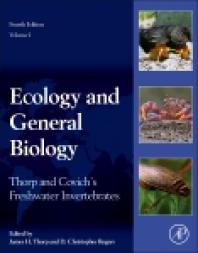 Thorp and Covich's Freshwater Invertebrates
by
Readers familiar with the first three editions of Ecology and Classification of North American Freshwater Invertebrates (edited by J.H. Thorp and A.P. Covich) will welcome the comprehensive revision and expansion of that trusted professional reference manual and educational textbook from a single North American tome into a developing multi-volume series covering inland water invertebrates of the world. The series entitled Thorp and Covich's Freshwater Invertebrates (edited by J.H. Thorp) begins with the current Volume I: Ecology and General Biology (edited by J.H. Thorp and D.C. Rogers), which is designed as a companion volume for the remaining books in the series. Those following volumes provide taxonomic coverage for specific zoogeographic regions of the world, starting with Keys to Nearctic Fauna (Vol. II) and Keys to Palaearctic Fauna (Vol. III). Volume I maintains the ecological and general biological focus of the previous editions but now expands coverage globally in all chapters, includes more taxonomic groups (e.g., chapters on individual insect orders), and covers additional functional topics such as invasive species, economic impacts, and functional ecology. As in previous editions, the 4th edition of Ecology and Classification of North American Freshwater Invertebrates is designed for use by professionals in universities, government agencies, and private companies as well as by undergraduate and graduate students.
Thorp and Covich's Freshwater Invertebrates
by
Readers familiar with the first three editions of Ecology and Classification of North American Freshwater Invertebrates (edited by J.H. Thorp and A.P. Covich) will welcome the comprehensive revision and expansion of that trusted professional reference manual and educational textbook from a single North American tome into a developing multi-volume series covering inland water invertebrates of the world. The series entitled Thorp and Covich's Freshwater Invertebrates (edited by J.H. Thorp) begins with the current Volume I: Ecology and General Biology (edited by J.H. Thorp and D.C. Rogers), which is designed as a companion volume for the remaining books in the series. Those following volumes provide taxonomic coverage for specific zoogeographic regions of the world, starting with Keys to Nearctic Fauna (Vol. II) and Keys to Palaearctic Fauna (Vol. III). Volume I maintains the ecological and general biological focus of the previous editions but now expands coverage globally in all chapters, includes more taxonomic groups (e.g., chapters on individual insect orders), and covers additional functional topics such as invasive species, economic impacts, and functional ecology. As in previous editions, the 4th edition of Ecology and Classification of North American Freshwater Invertebrates is designed for use by professionals in universities, government agencies, and private companies as well as by undergraduate and graduate students.
This site is maintained by the librarians of George A. Spiva Library.
If you have a question or comment about the Library's LibGuides, please contact the site administrator.
