
 Egypt and the Ancient Near East
by
Pharaohs and Mortals
by
The Ancient View of Greek Art
by
What did the ancient Greeks think about their own art? J.J. Pollitt attempts to answer this question by studying the critical terminology of the ancient Greeks-the terms they used to describe and evaluate sculpture, painting, and architecture. Although Greeks and Romans with a wide variety of backgrounds and interests-including artists, philosophers, rhetoricians, historians, and guidebook writers-wrote about art in antiquity, very few of their works have survived. Mr. Pollitt has therefore had to draw largely on works of authors who, while discussing some other subject, make passing references to art for the purpose of analogy or illustration. By carefully assembling and organizing these fragments, he presents a coherent view of art criticism in ancient Greece. This study is divided into two parts. The first part provides a general history of Greek art criticism and its sources. The second is an extensive glossary which collects, translates, and analyzes passages from Greek and Latin authors in which important critical terms are used. The book can therefore be used by art historians and classicists as both a scholarly text and an important work of reference.
Animals in Roman Life and Art
by
Romans clearly loved their pets and gave them human names. The wealthiest kept gazelles and ibex on their estates as living lawn ornaments. At the same time, they imported exotic animals from Africa and then slaughtered them in both gladiatorial combat and cold-blooded spectacle. Animals in Roman Life and Art explores animals in Roman iconography, Roman knowledge - both factual and fanciful - about various fauna, and Roman use of animals for food, clothing, transport, war, entertainment, religious ceremony, and companionship. Arranged by species, J.M.C Toynbee's magisterial survey ranges from the exotic (the rhinoceros and hippopotamus) to the commonplace (dogs and cats). Toynbee concludes her study with a discussion of Roman beliefs about animals in the afterlife, where, according to Virgil, "the herds will not fear the mighty lion" and "the timid deer will ... drink beside the hounds".
Egypt and the Ancient Near East
by
Pharaohs and Mortals
by
The Ancient View of Greek Art
by
What did the ancient Greeks think about their own art? J.J. Pollitt attempts to answer this question by studying the critical terminology of the ancient Greeks-the terms they used to describe and evaluate sculpture, painting, and architecture. Although Greeks and Romans with a wide variety of backgrounds and interests-including artists, philosophers, rhetoricians, historians, and guidebook writers-wrote about art in antiquity, very few of their works have survived. Mr. Pollitt has therefore had to draw largely on works of authors who, while discussing some other subject, make passing references to art for the purpose of analogy or illustration. By carefully assembling and organizing these fragments, he presents a coherent view of art criticism in ancient Greece. This study is divided into two parts. The first part provides a general history of Greek art criticism and its sources. The second is an extensive glossary which collects, translates, and analyzes passages from Greek and Latin authors in which important critical terms are used. The book can therefore be used by art historians and classicists as both a scholarly text and an important work of reference.
Animals in Roman Life and Art
by
Romans clearly loved their pets and gave them human names. The wealthiest kept gazelles and ibex on their estates as living lawn ornaments. At the same time, they imported exotic animals from Africa and then slaughtered them in both gladiatorial combat and cold-blooded spectacle. Animals in Roman Life and Art explores animals in Roman iconography, Roman knowledge - both factual and fanciful - about various fauna, and Roman use of animals for food, clothing, transport, war, entertainment, religious ceremony, and companionship. Arranged by species, J.M.C Toynbee's magisterial survey ranges from the exotic (the rhinoceros and hippopotamus) to the commonplace (dogs and cats). Toynbee concludes her study with a discussion of Roman beliefs about animals in the afterlife, where, according to Virgil, "the herds will not fear the mighty lion" and "the timid deer will ... drink beside the hounds".
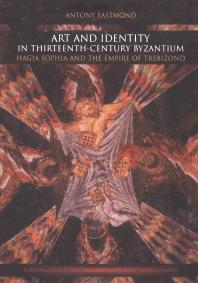 Art and Identity in Thirteenth-Century Byzantium
by
The church of Hagia Sophia in Trebizond, built by the emperor Manuel I Grand Komnenos (1238-63) in the aftermath of the fall of Constantinople to the Fourth Crusade, is the finest surviving Byzantine imperial monument of its period. Art and Identity in Thirteenth-Century Byzantium is the first investigation of the church in more than thirty years, and is extensively illustrated in colour and black-and-white, with many images that have never previously been published. Antony Eastmond examines the architectural, sculptural and painted decorations of the church, placing them in the context of contemporary developments elsewhere in the Byzantine world, in Seljuq Anatolia and among the Caucasian neighbours of Trebizond. Knowledge of this area has been transformed in the last twenty years, following the collapse of the Soviet Union. The new evidence that has emerged enables a radically different interpretation of the church to be reached, and raises questions of cultural interchange on the borders of the Christian and Muslim worlds of eastern Anatolia, the Caucasus and Persia. This study uses the church and its decoration to examine questions of Byzantine identity and imperial ideology in the thirteenth century. This is central to any understanding of the period, as the fall of Constantinople in 1204 divided the Byzantine empire and forced the successor states in Nicaea, Epiros and Trebizond to redefine their concepts of empire in exile. Art is here exploited as significant historical evidence for the nature of imperial power in a contested empire. It is suggested that imperial identity was determined as much by craftsmen and expectations of imperial power as by the emperor's decree; and that this was a credible alternative Byzantine identity to that developed in the empire of Nicaea.
Byzantine Art in the Making
by
Byzantine Mosaic Decoration
by
Early Medieval Art : Carolingian, Ottonian, Romanesque
by
The Gothic Idol: Ideology and Image-making in Medieval Art
by
By examining the theme of idol-worship in medieval art, this book reveals the ideological basis of paintings, statues and manuscript illuminations that depict the worship of false gods in the thirteenth and fourteenth centuries. By showing that images of idolatry stood for those outside the Church - pagans, Muslims, Jews, heretics, homosexuals - Camille sheds light on how medieval society viewed both alien 'others' and itself. He links the abhorrence of worshipping false gods in images to an 'image-explosion' in the thirteenth century when the Christian Church was filled with cult statues, miracle-working relics, and 'real' representations in the Gothic style. In attempting to bring the Gothic image to life, Camille shows how images can teach us about attitudes and beliefs in a particular society.
Art and Identity in Thirteenth-Century Byzantium
by
The church of Hagia Sophia in Trebizond, built by the emperor Manuel I Grand Komnenos (1238-63) in the aftermath of the fall of Constantinople to the Fourth Crusade, is the finest surviving Byzantine imperial monument of its period. Art and Identity in Thirteenth-Century Byzantium is the first investigation of the church in more than thirty years, and is extensively illustrated in colour and black-and-white, with many images that have never previously been published. Antony Eastmond examines the architectural, sculptural and painted decorations of the church, placing them in the context of contemporary developments elsewhere in the Byzantine world, in Seljuq Anatolia and among the Caucasian neighbours of Trebizond. Knowledge of this area has been transformed in the last twenty years, following the collapse of the Soviet Union. The new evidence that has emerged enables a radically different interpretation of the church to be reached, and raises questions of cultural interchange on the borders of the Christian and Muslim worlds of eastern Anatolia, the Caucasus and Persia. This study uses the church and its decoration to examine questions of Byzantine identity and imperial ideology in the thirteenth century. This is central to any understanding of the period, as the fall of Constantinople in 1204 divided the Byzantine empire and forced the successor states in Nicaea, Epiros and Trebizond to redefine their concepts of empire in exile. Art is here exploited as significant historical evidence for the nature of imperial power in a contested empire. It is suggested that imperial identity was determined as much by craftsmen and expectations of imperial power as by the emperor's decree; and that this was a credible alternative Byzantine identity to that developed in the empire of Nicaea.
Byzantine Art in the Making
by
Byzantine Mosaic Decoration
by
Early Medieval Art : Carolingian, Ottonian, Romanesque
by
The Gothic Idol: Ideology and Image-making in Medieval Art
by
By examining the theme of idol-worship in medieval art, this book reveals the ideological basis of paintings, statues and manuscript illuminations that depict the worship of false gods in the thirteenth and fourteenth centuries. By showing that images of idolatry stood for those outside the Church - pagans, Muslims, Jews, heretics, homosexuals - Camille sheds light on how medieval society viewed both alien 'others' and itself. He links the abhorrence of worshipping false gods in images to an 'image-explosion' in the thirteenth century when the Christian Church was filled with cult statues, miracle-working relics, and 'real' representations in the Gothic style. In attempting to bring the Gothic image to life, Camille shows how images can teach us about attitudes and beliefs in a particular society.
This site is maintained by the librarians of George A. Spiva Library.
If you have a question or comment about the Library's LibGuides, please contact the site administrator.
